
The Art of the Fan
In 18th- and 19th-century European society, fans were much more than a way to keep cool. They were an essential part of a lady’s dress and appearance.
At a time when etiquette governed interactions between men and women, a fan could conceal an expression while also becoming part of the subtle exchange of glances, gestures and flirtation at balls and social gatherings.
Eventually, the famous “Language of the Fan” emerged—where the way a fan was held, opened or positioned was said to convey different romantic messages.
Although historians today believe that much of this elaborate “secret language” was romanticized and promoted by 19th-century fan makers and merchants, it reveals something fascinating about the role of the fan:
It was never simply a practical object for keeping cool, but a canvas for art and an integral part of social culture.
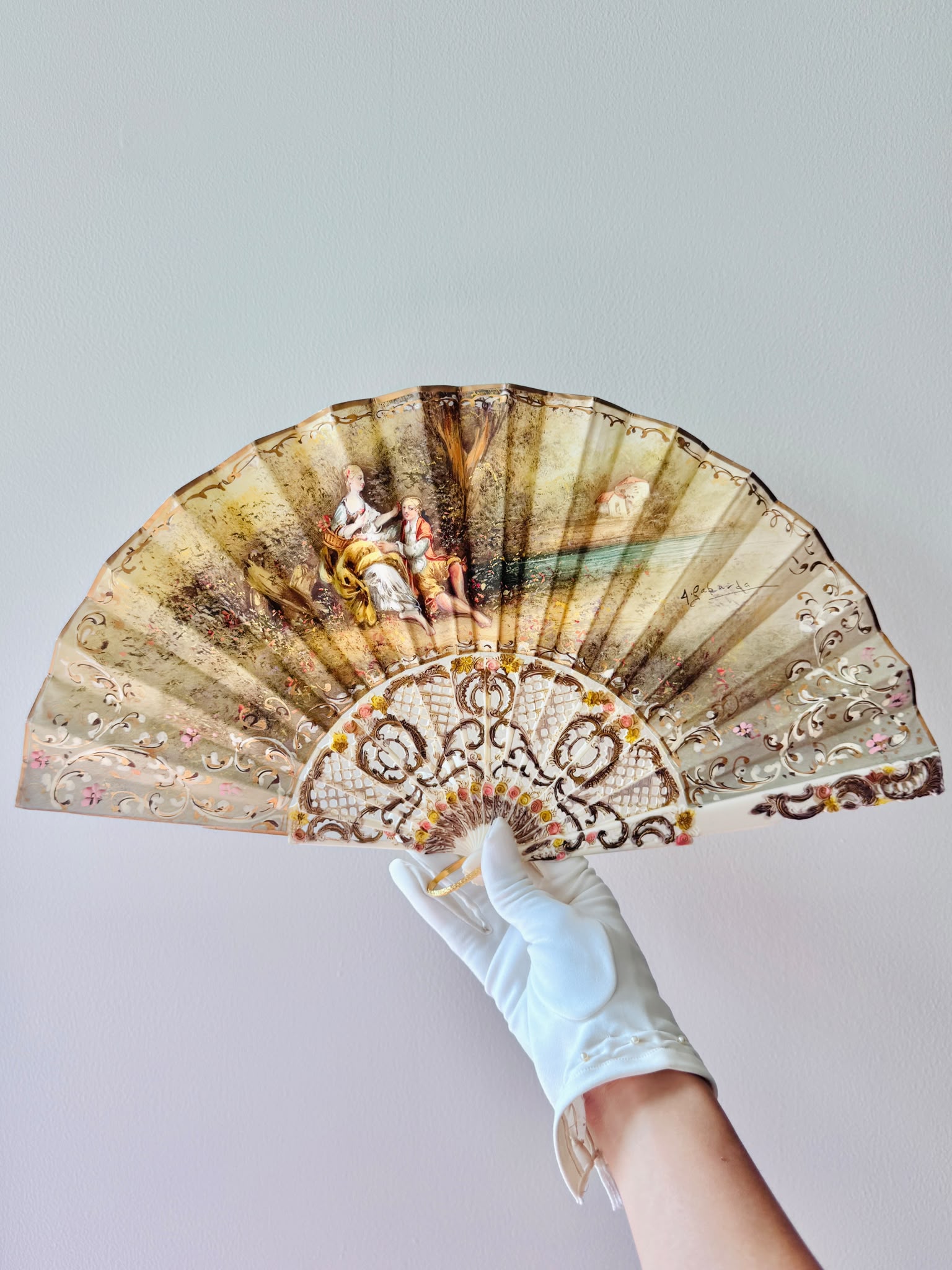
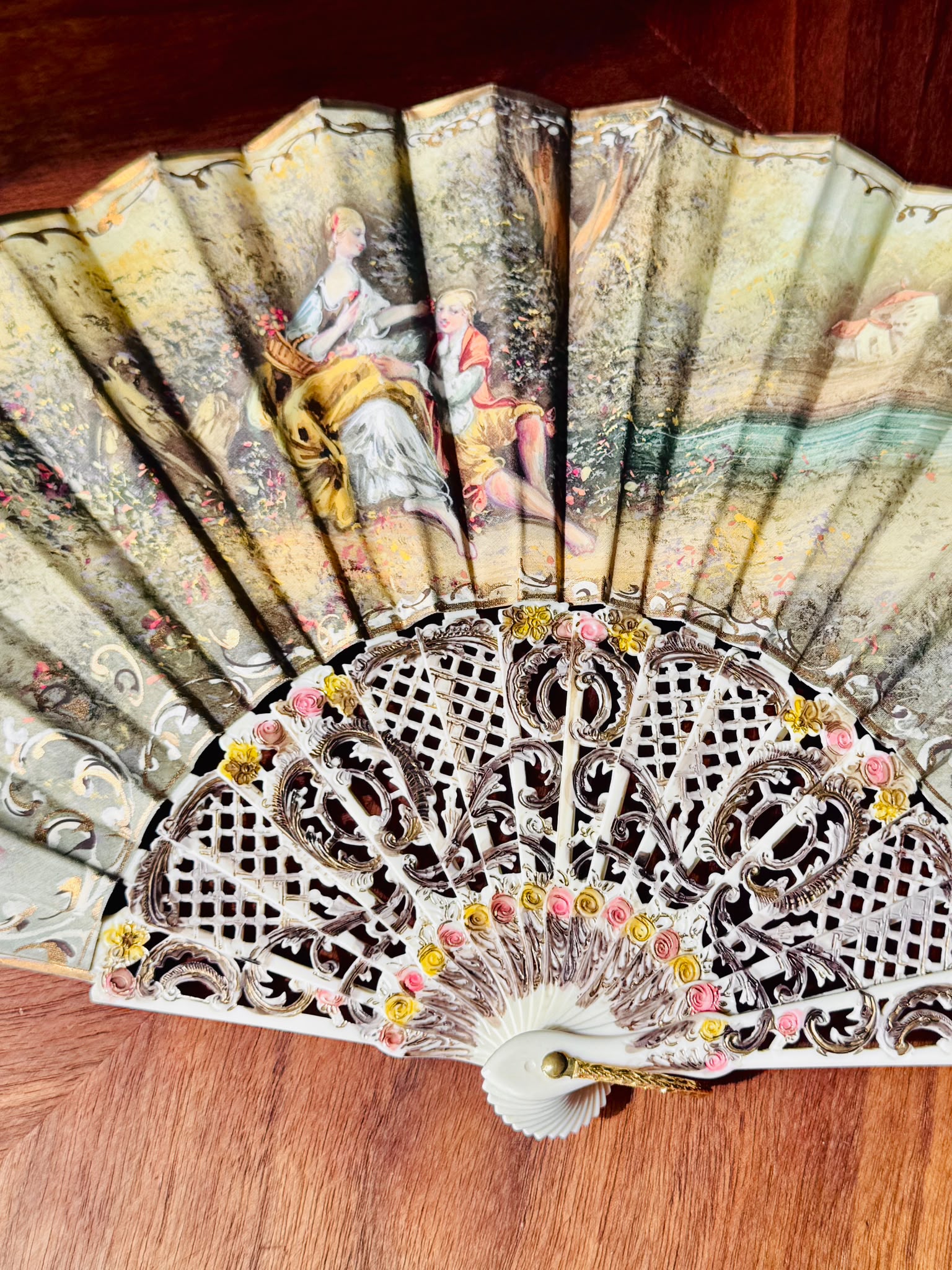
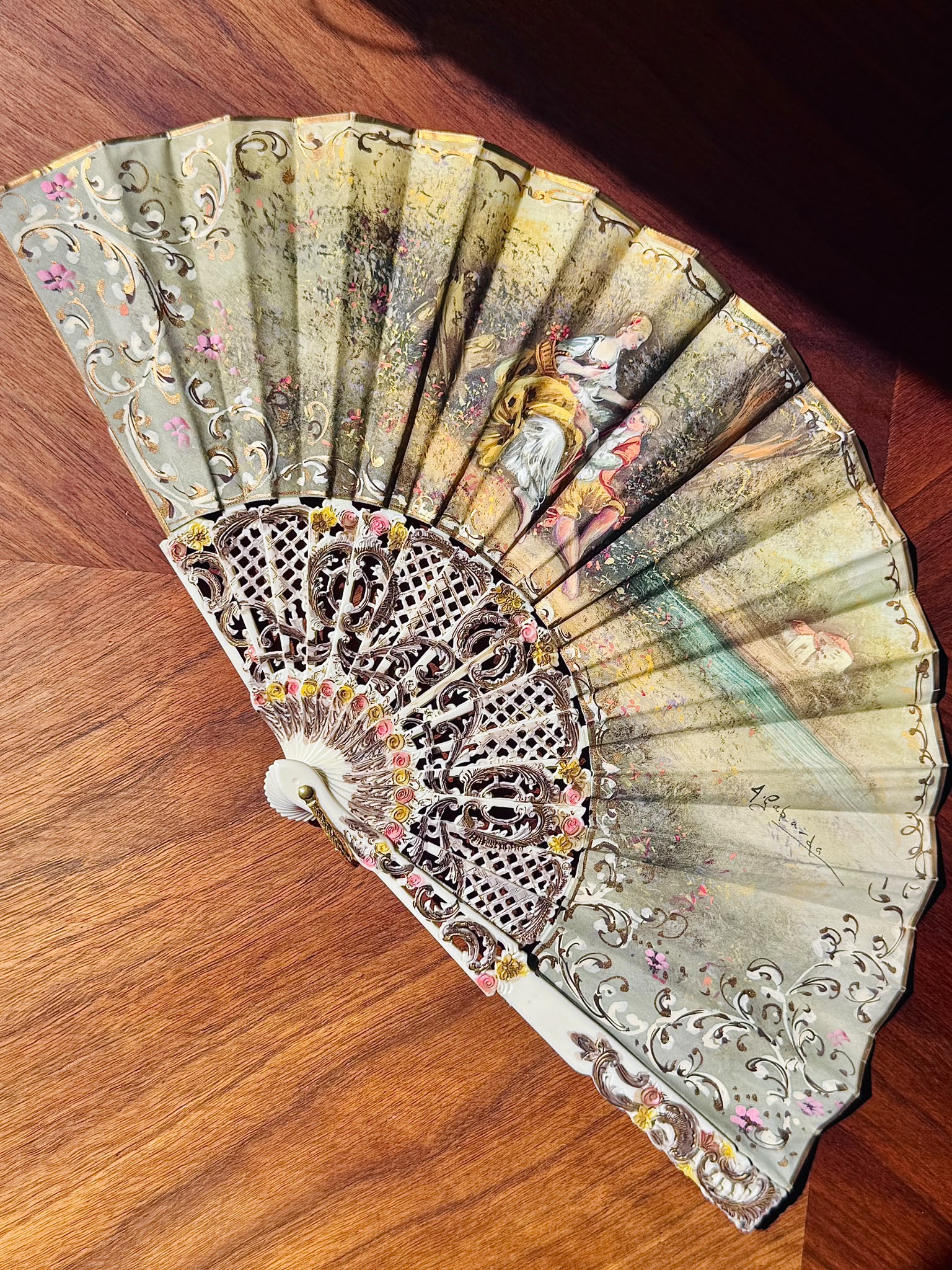
This particular fan has survived for more than a century.
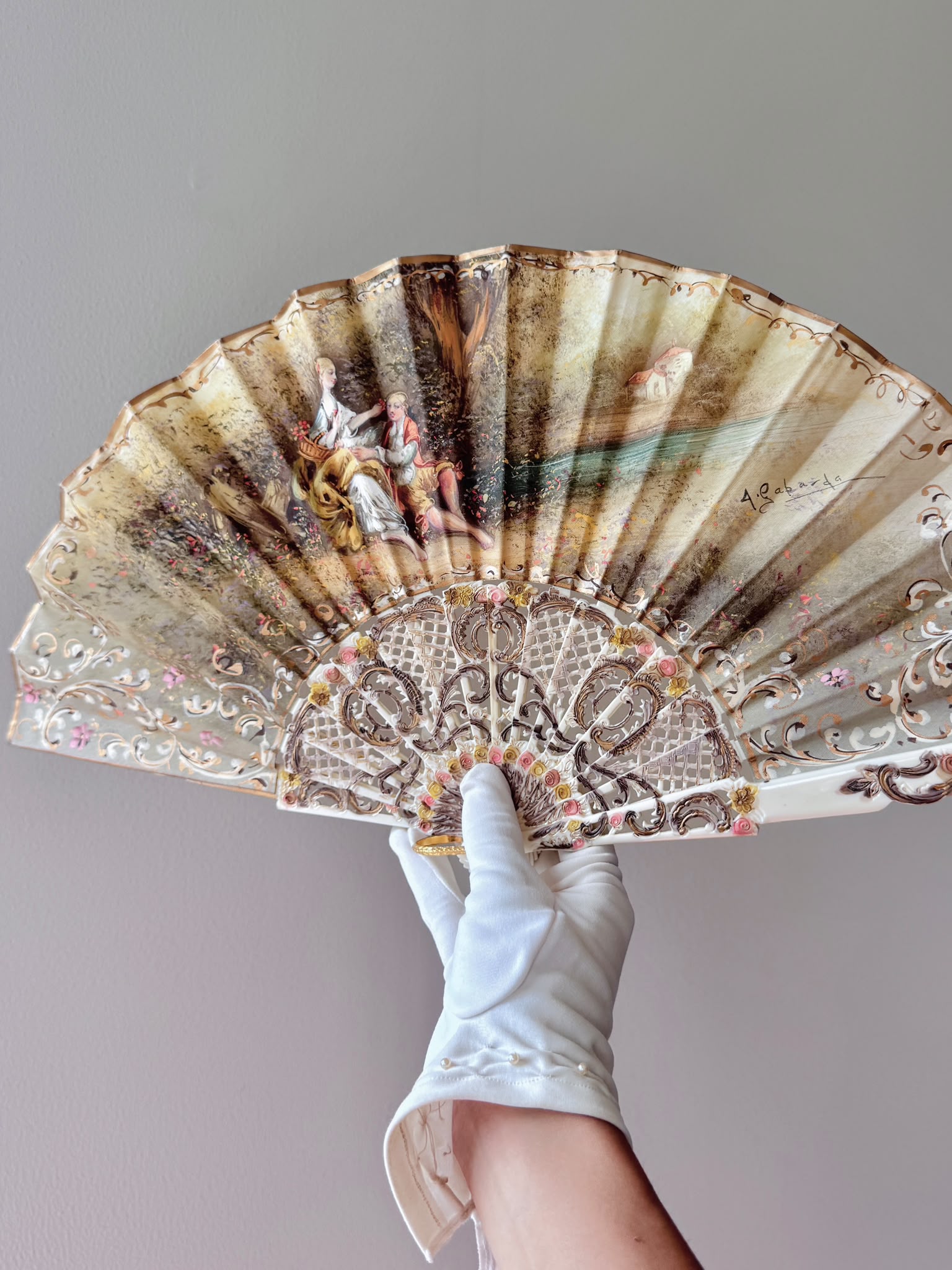
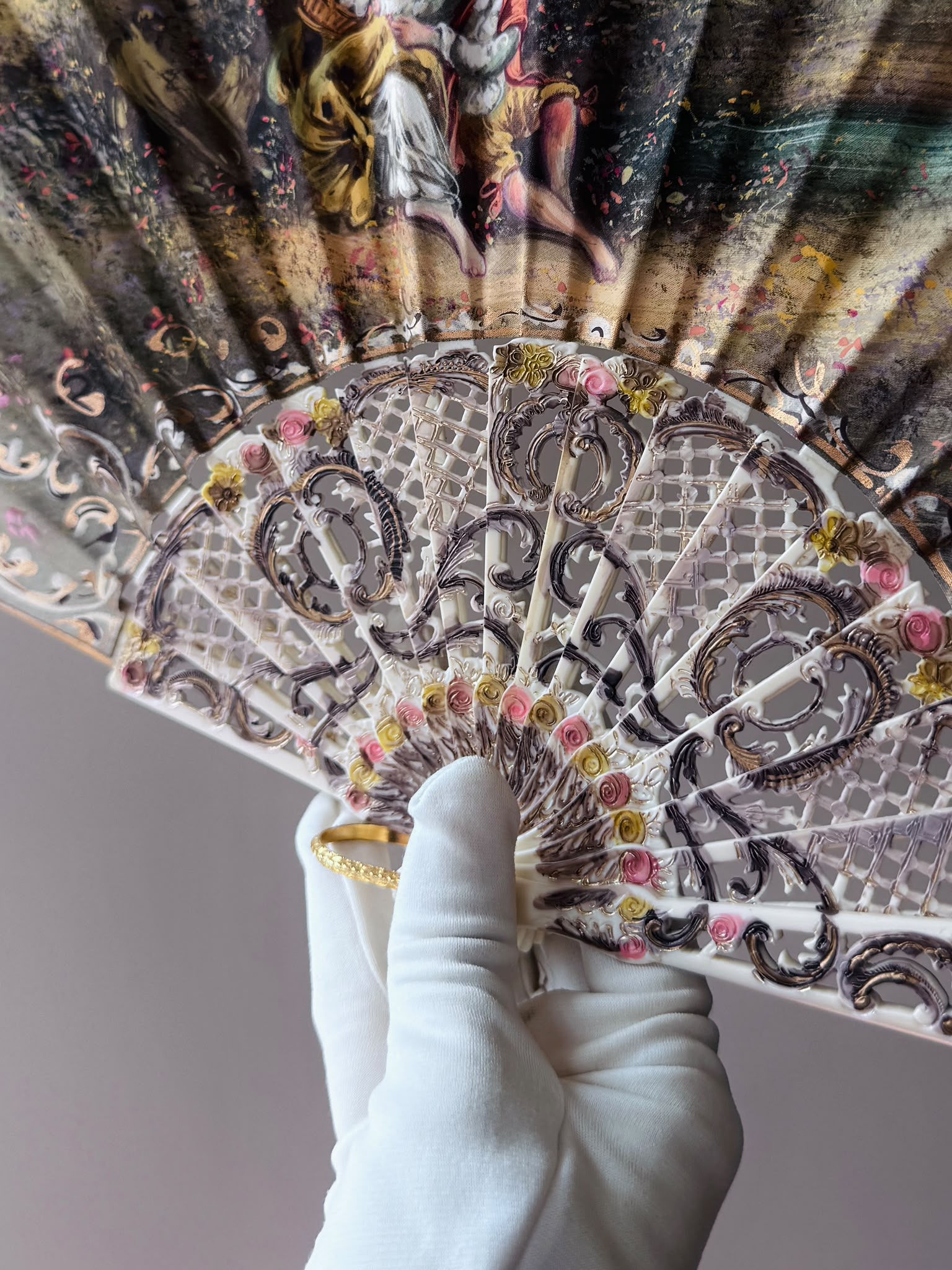
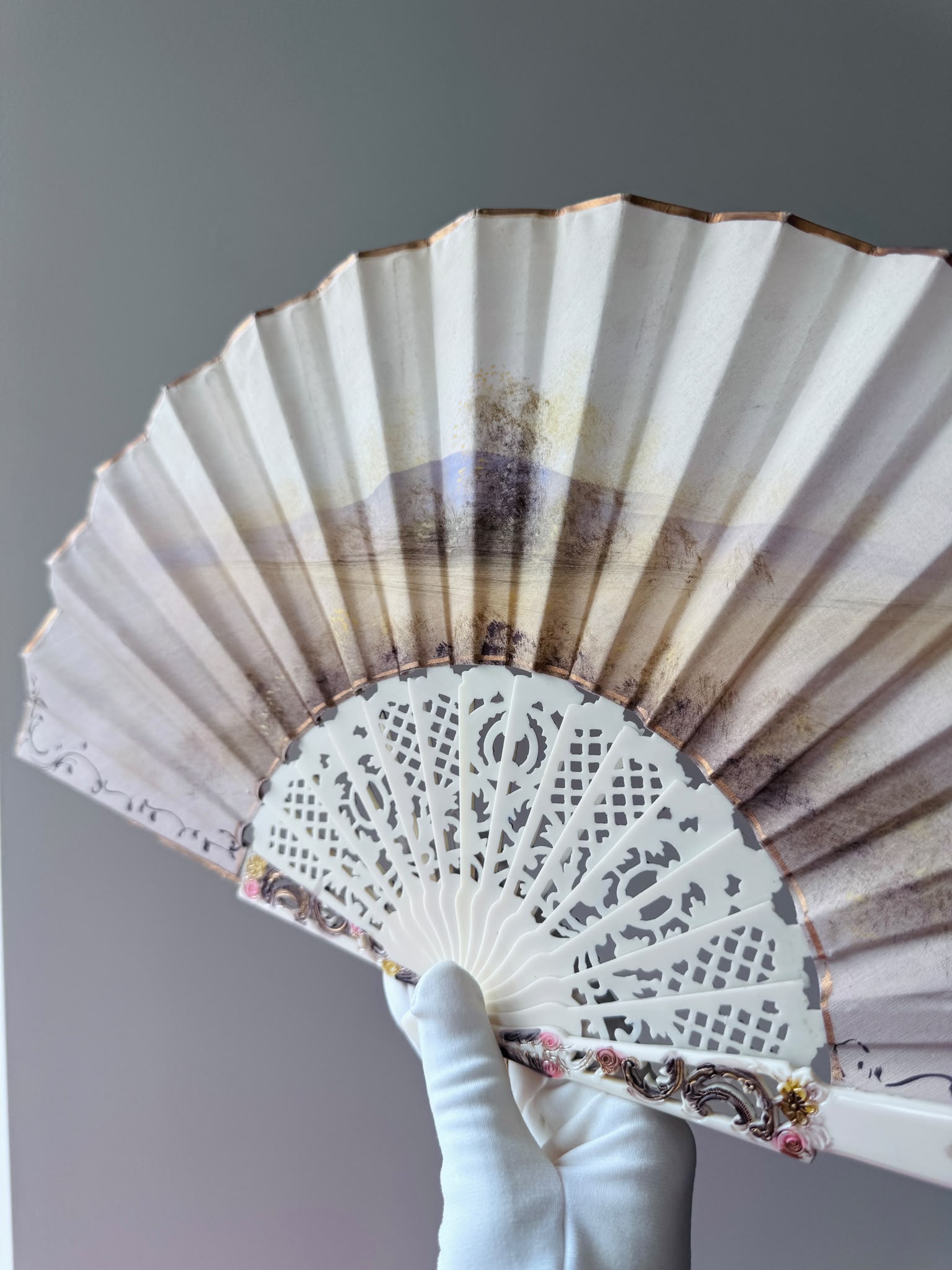
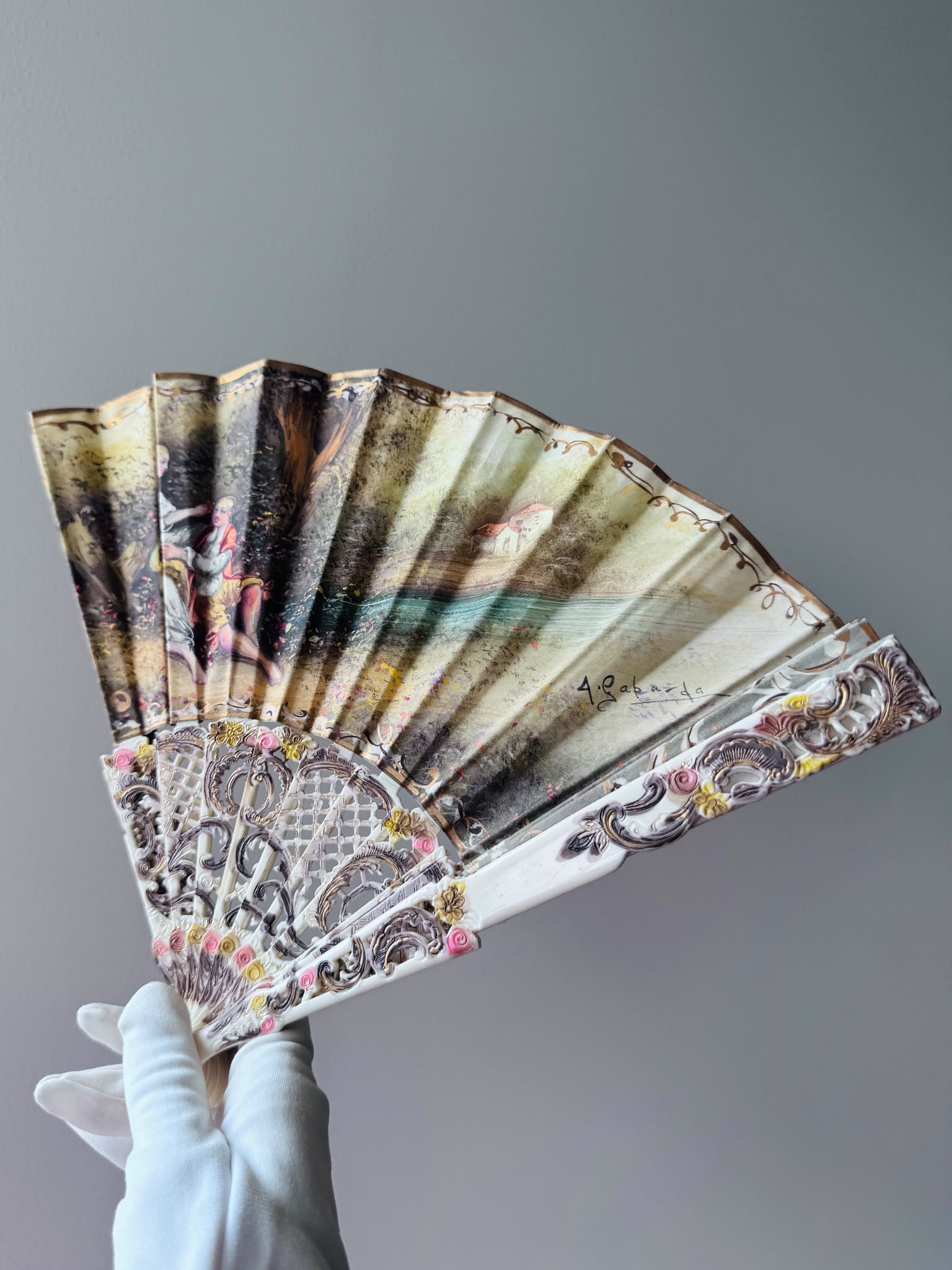
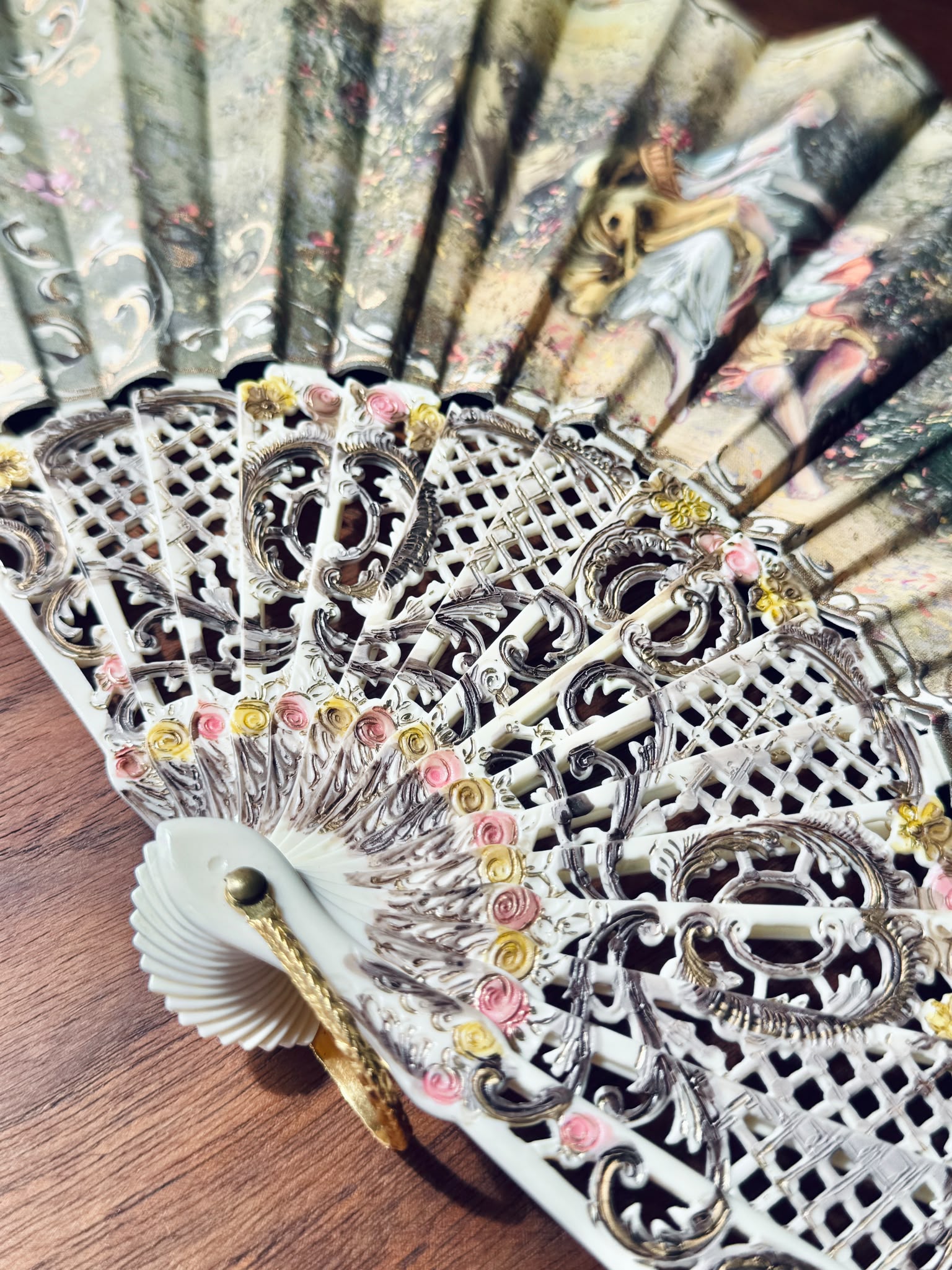
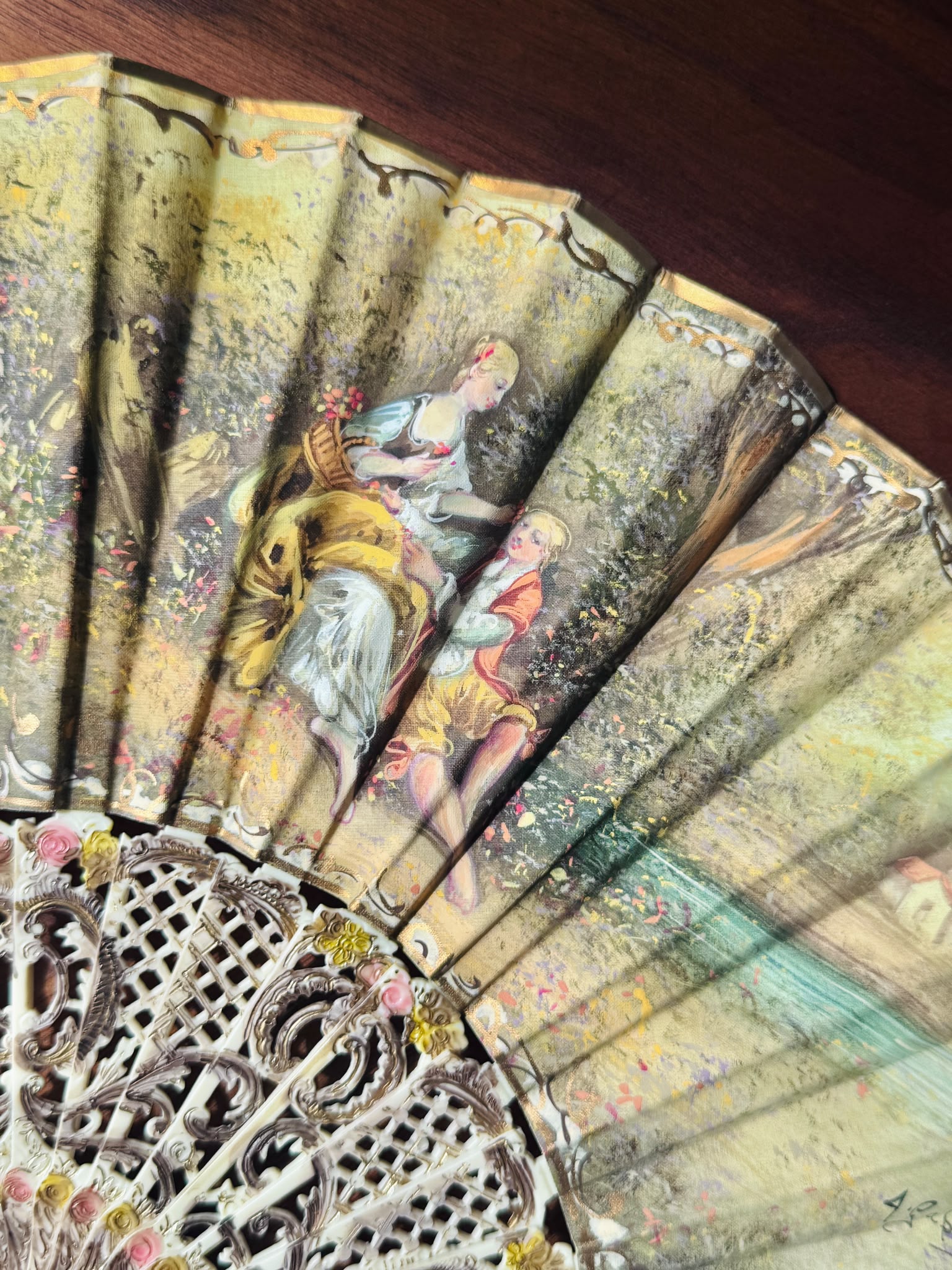
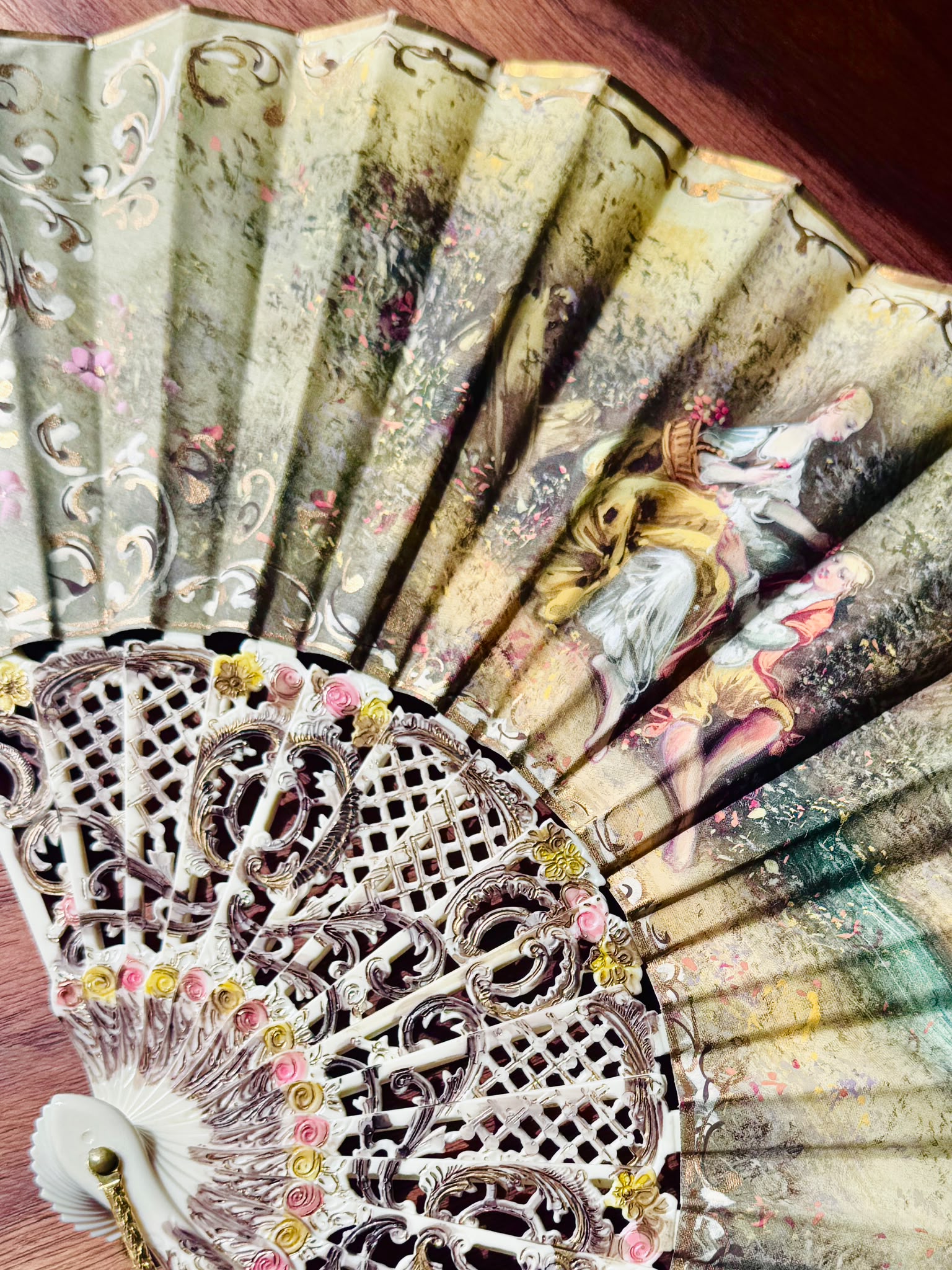
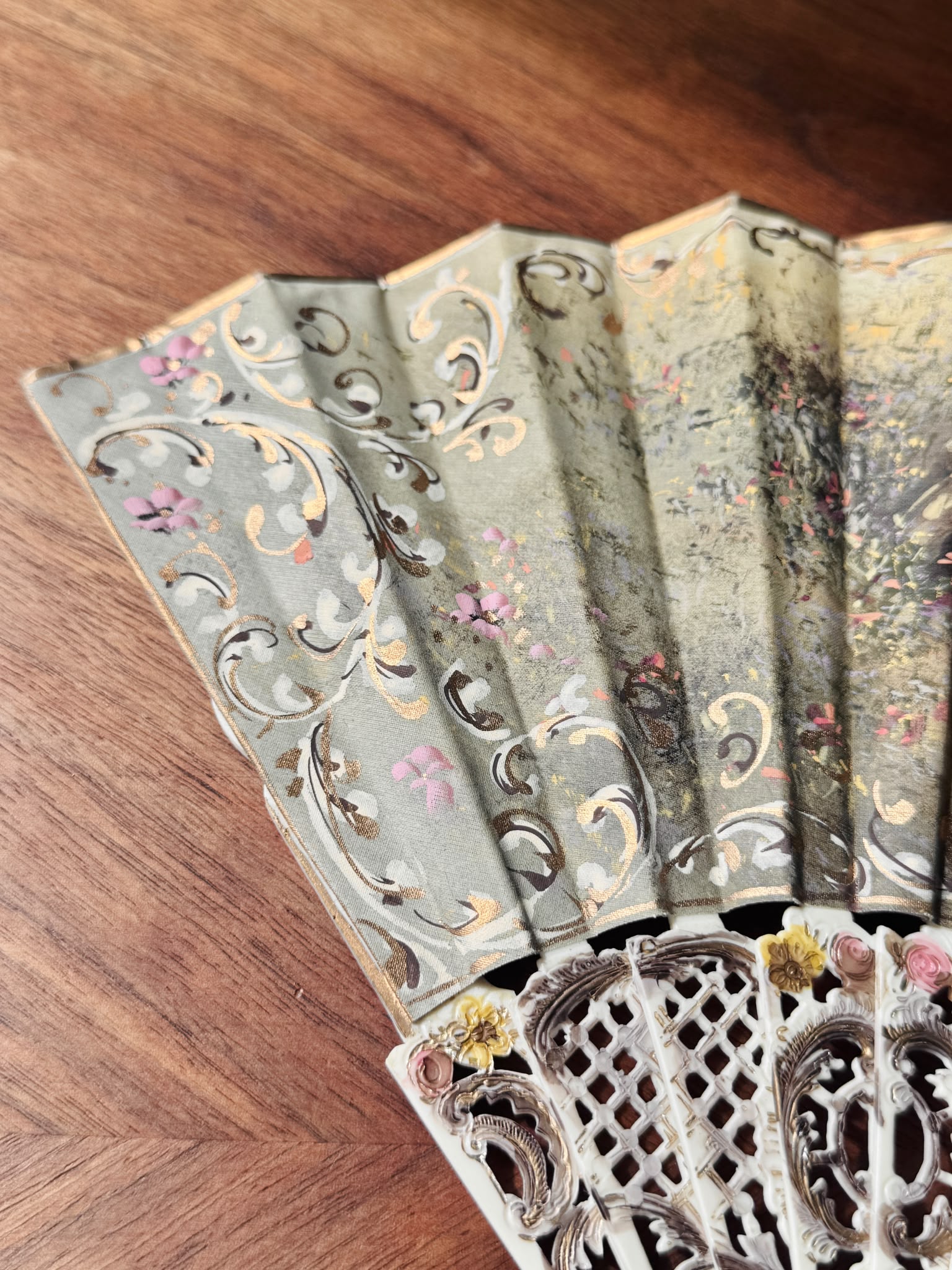
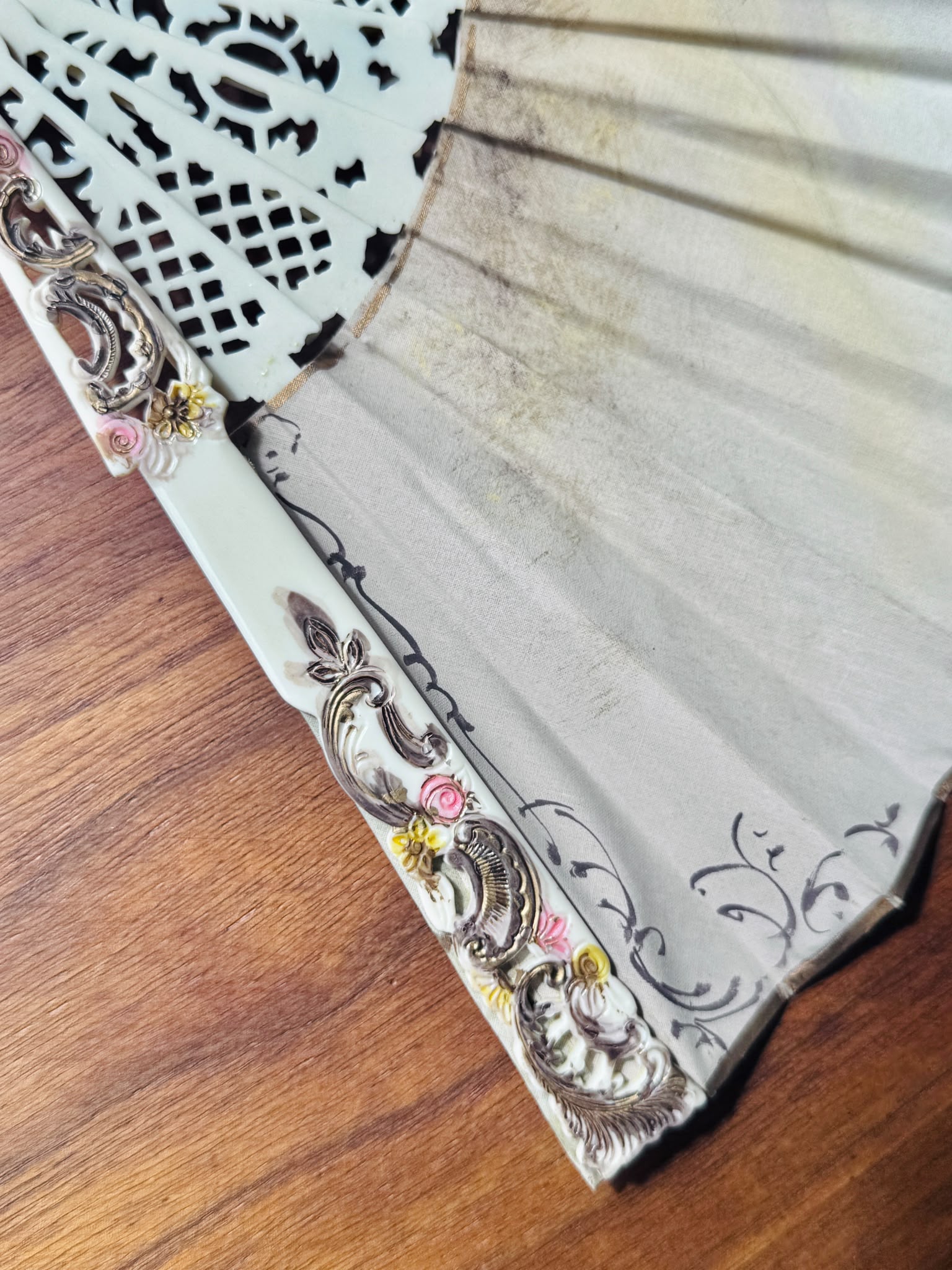
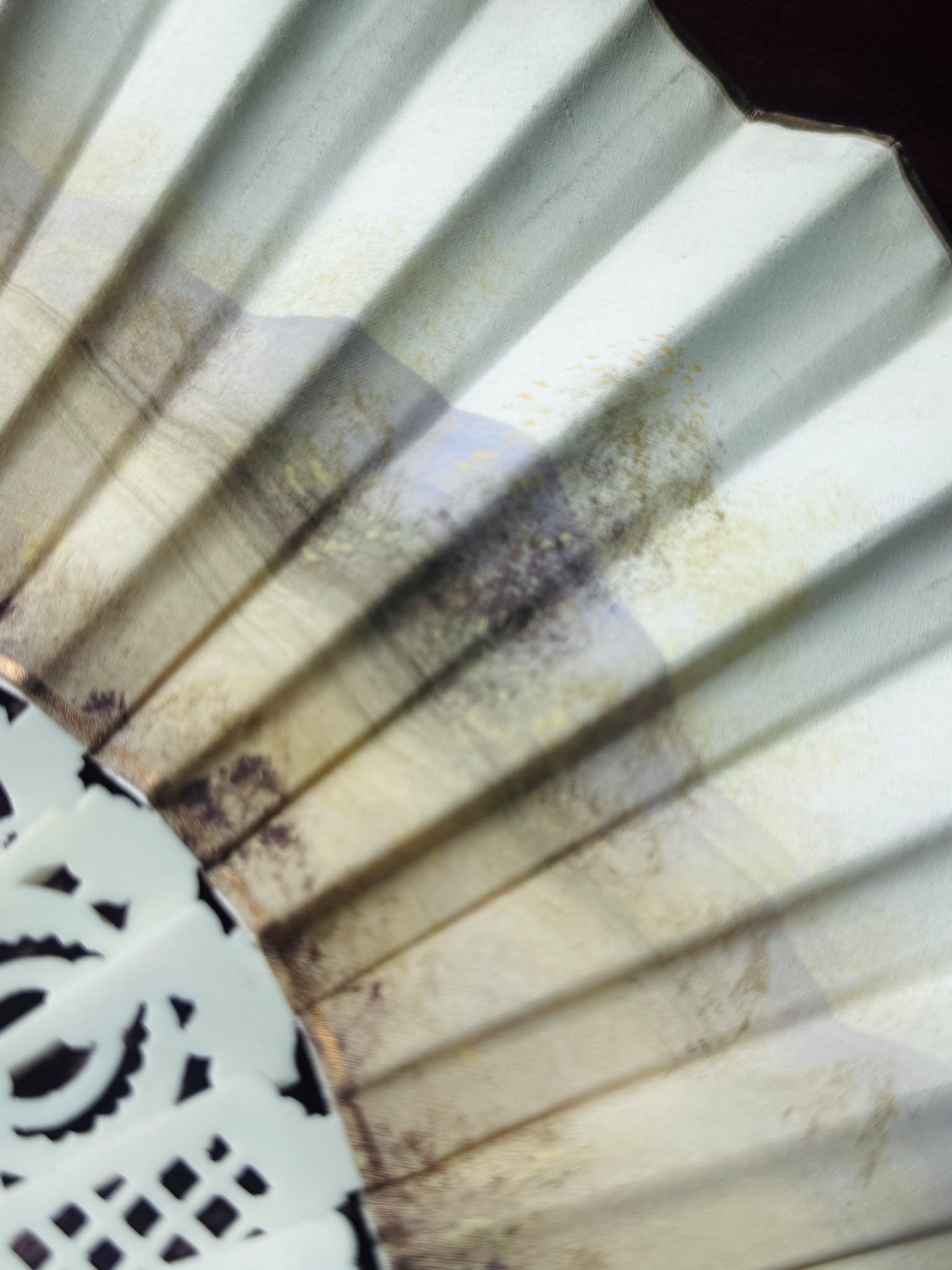
Dating approximately to 1890–1920 in Europe, its painted scene looks even further into the past, evoking the romantic world of the Rococo: elegantly dressed figures, pastoral scenery, flowers and delicate golden details—a revival of 18th-century elegance for a new generation.
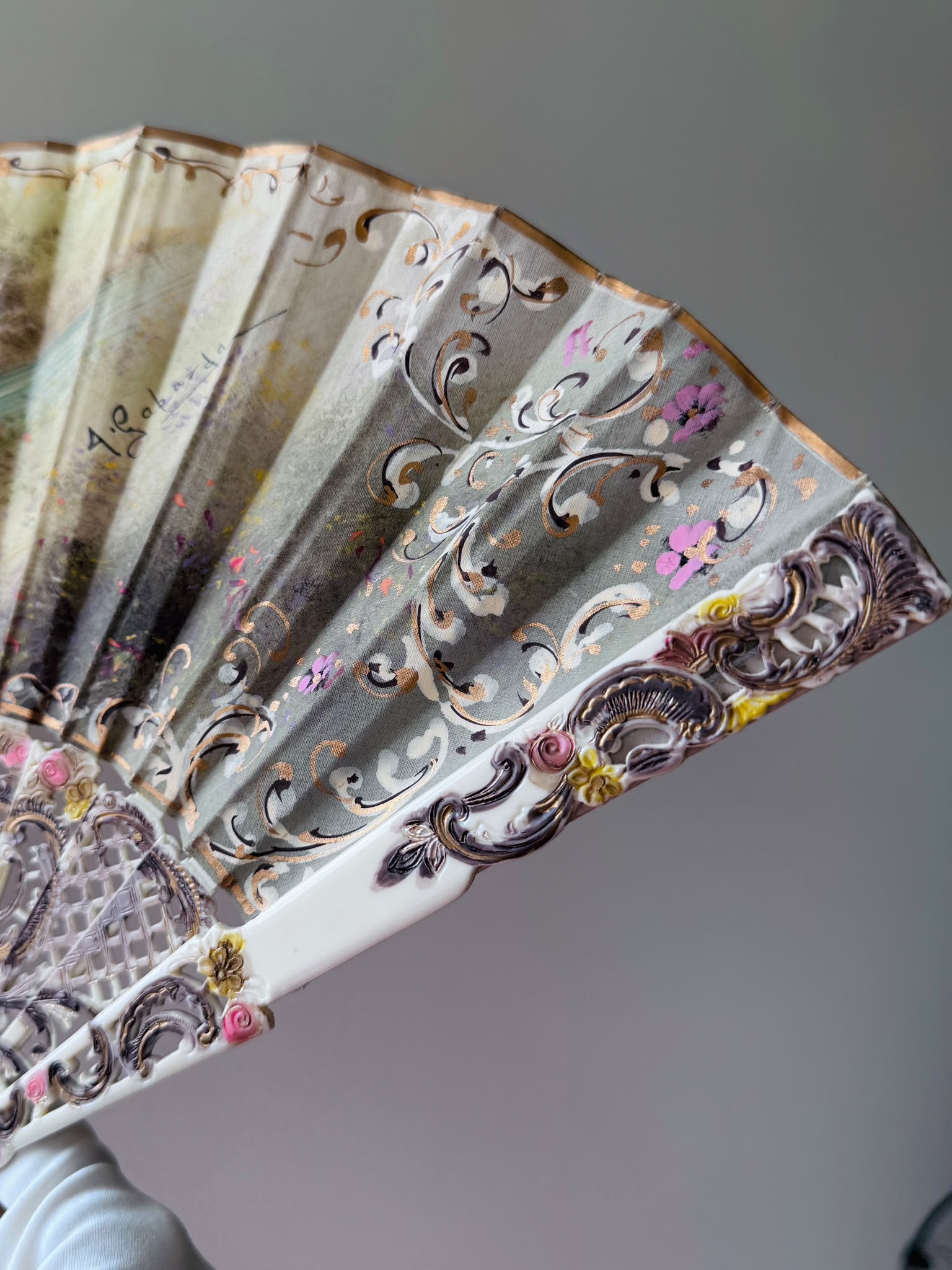
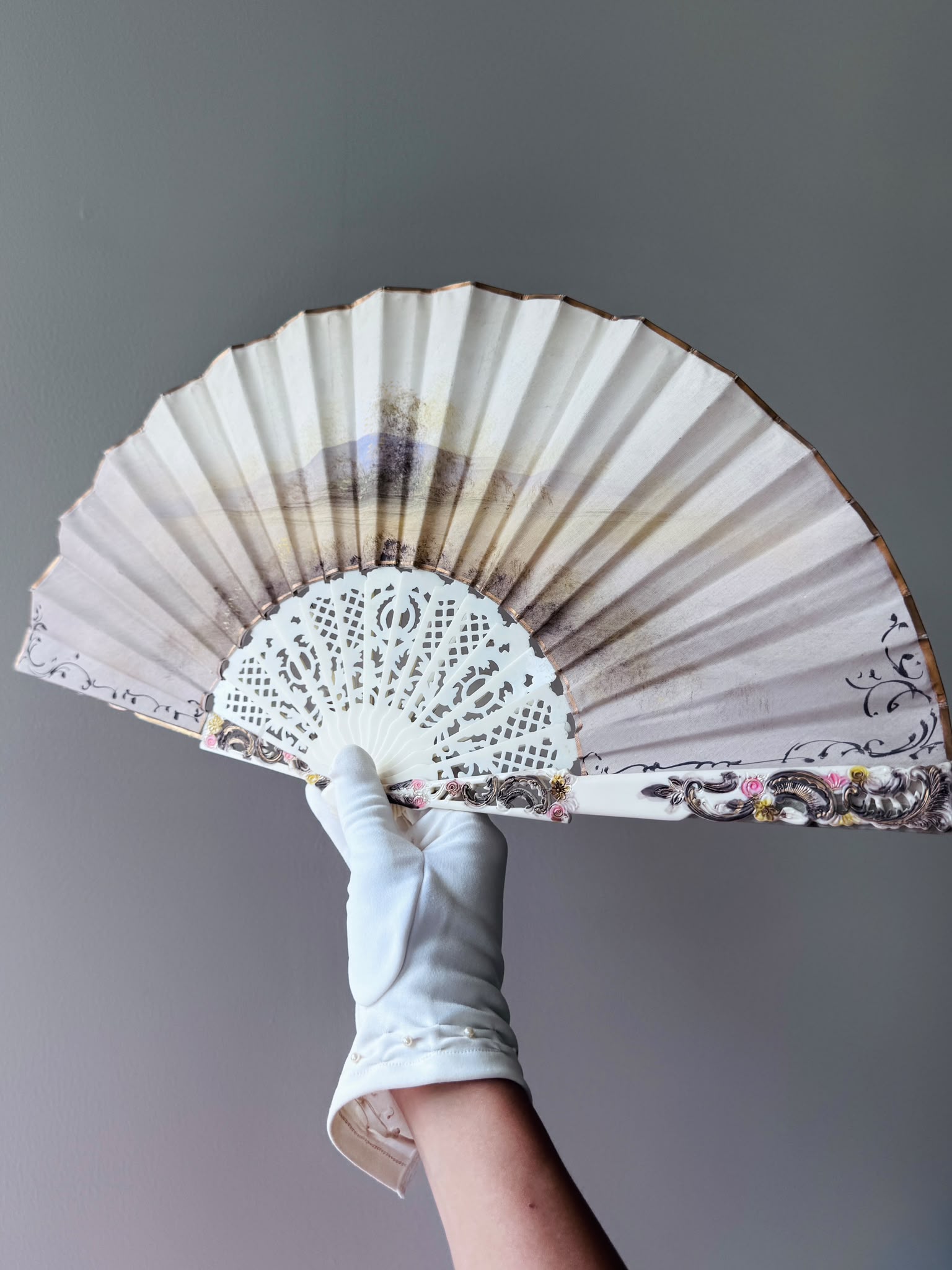
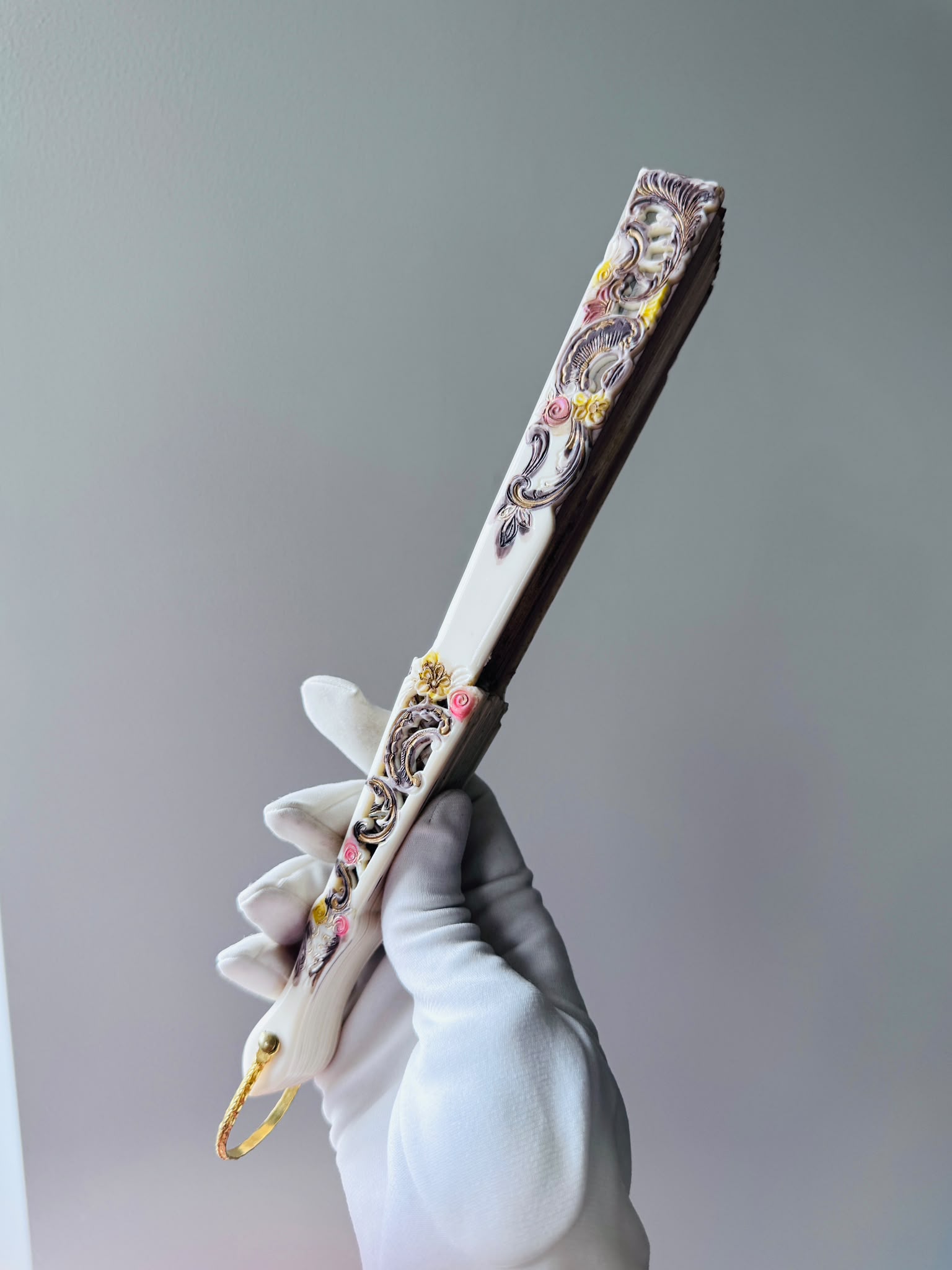
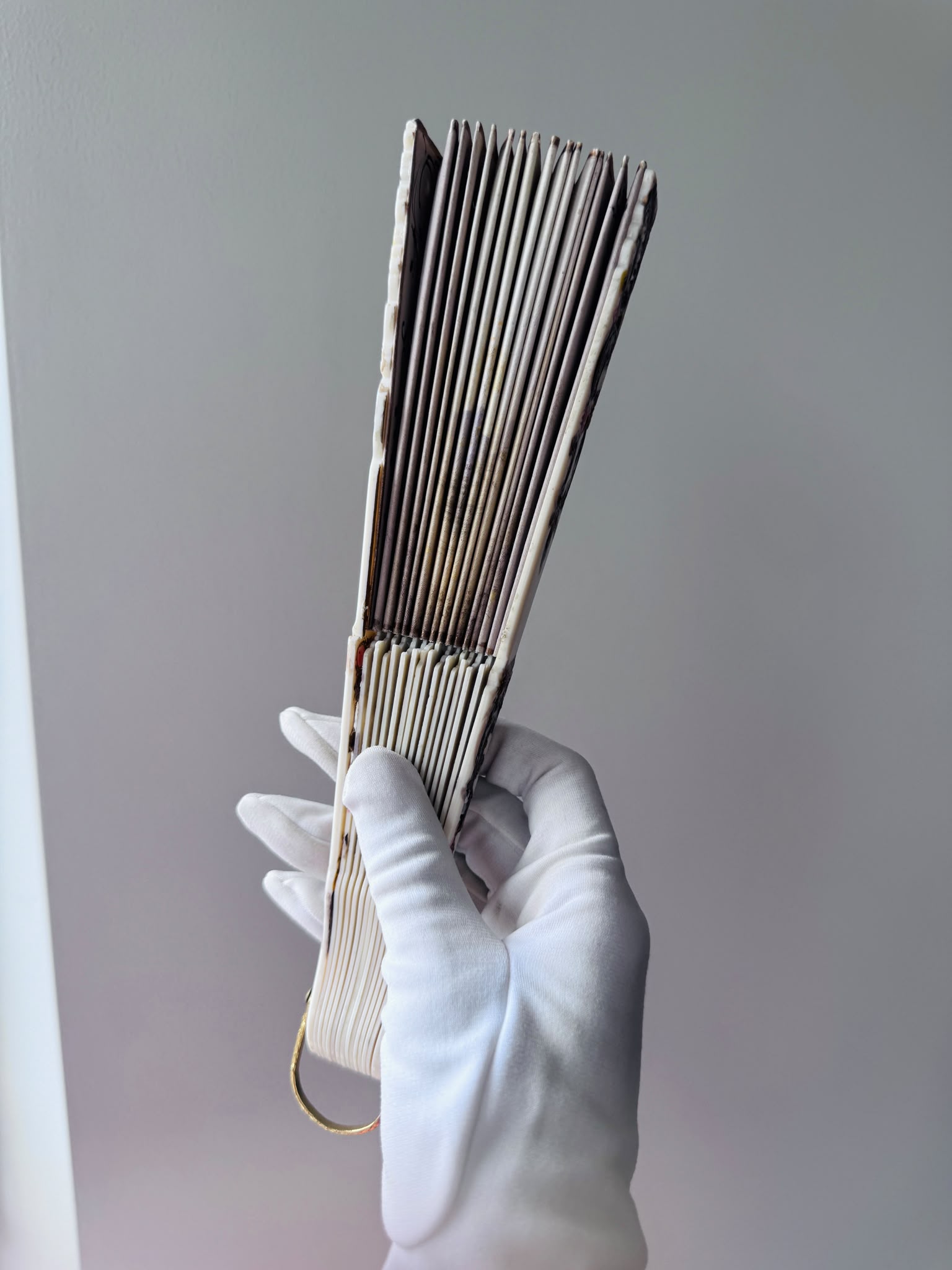
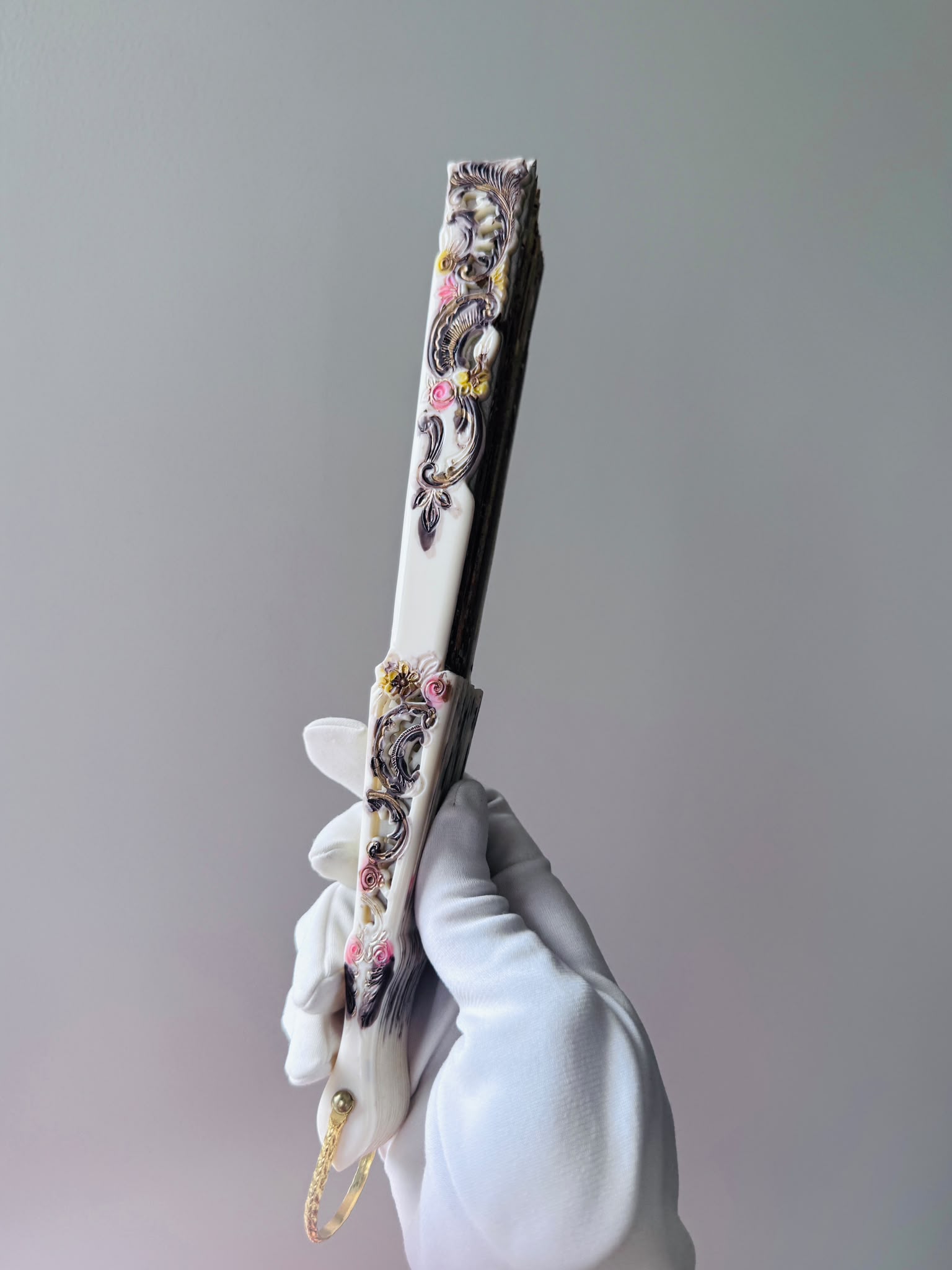
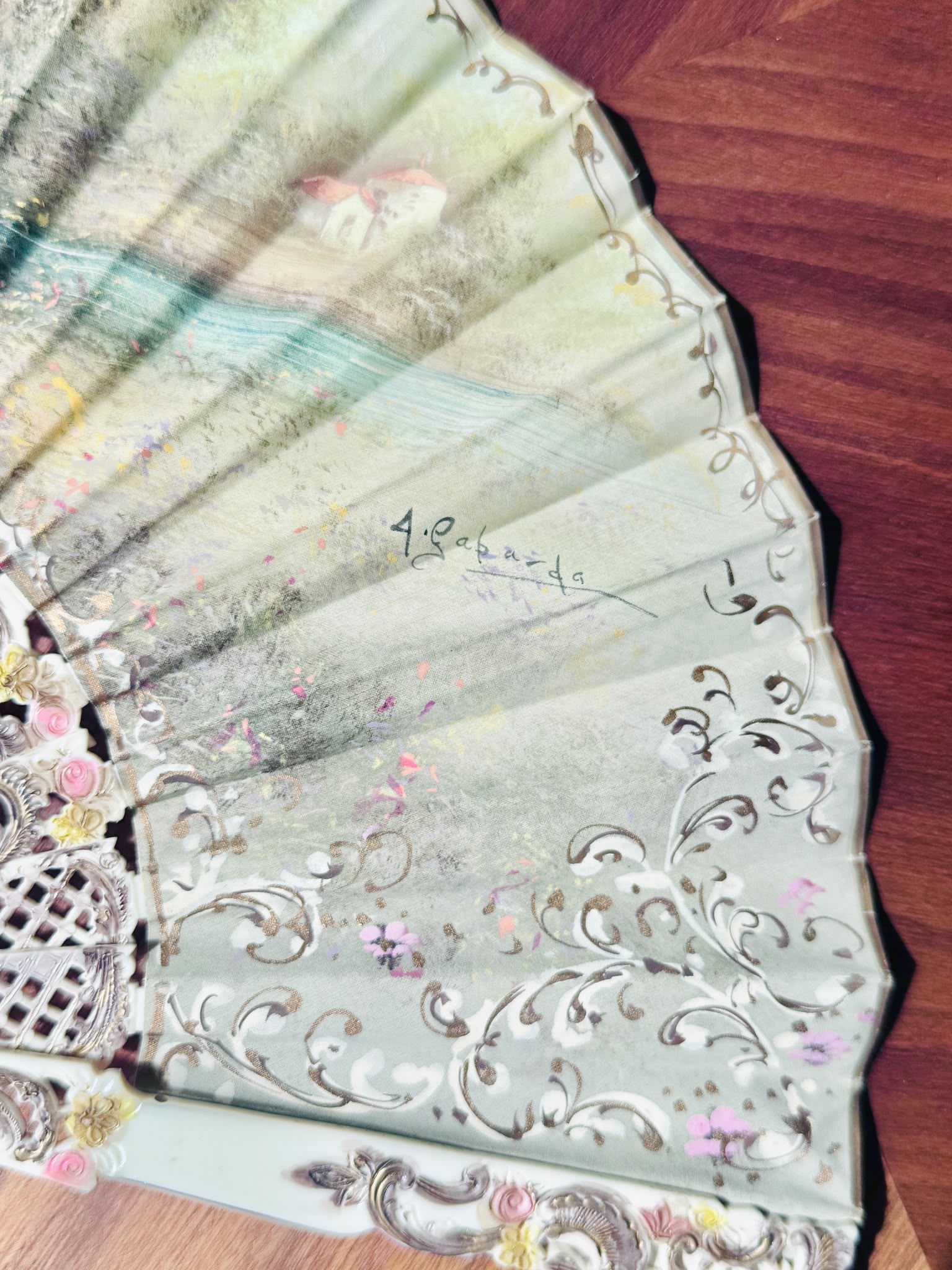
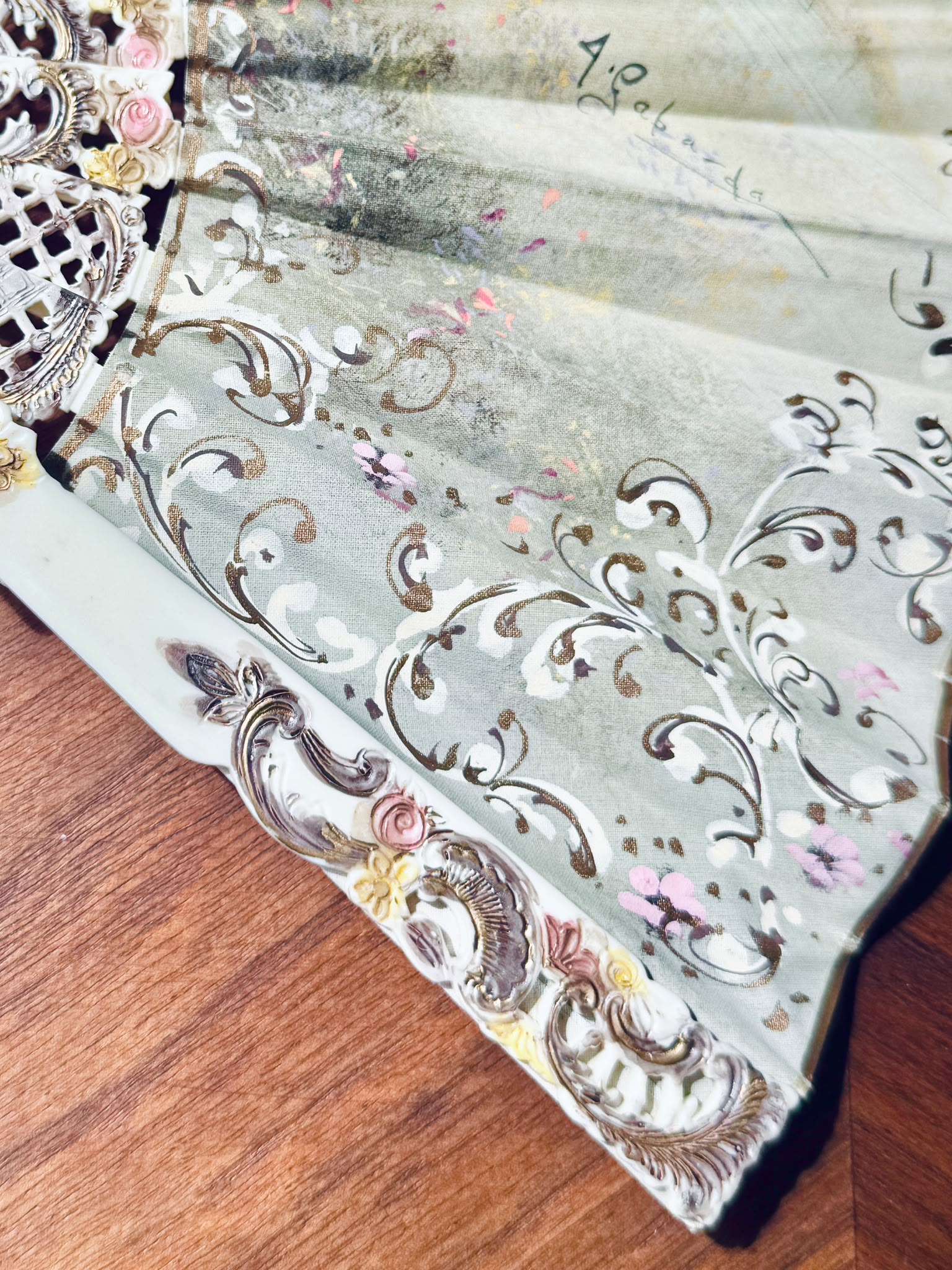
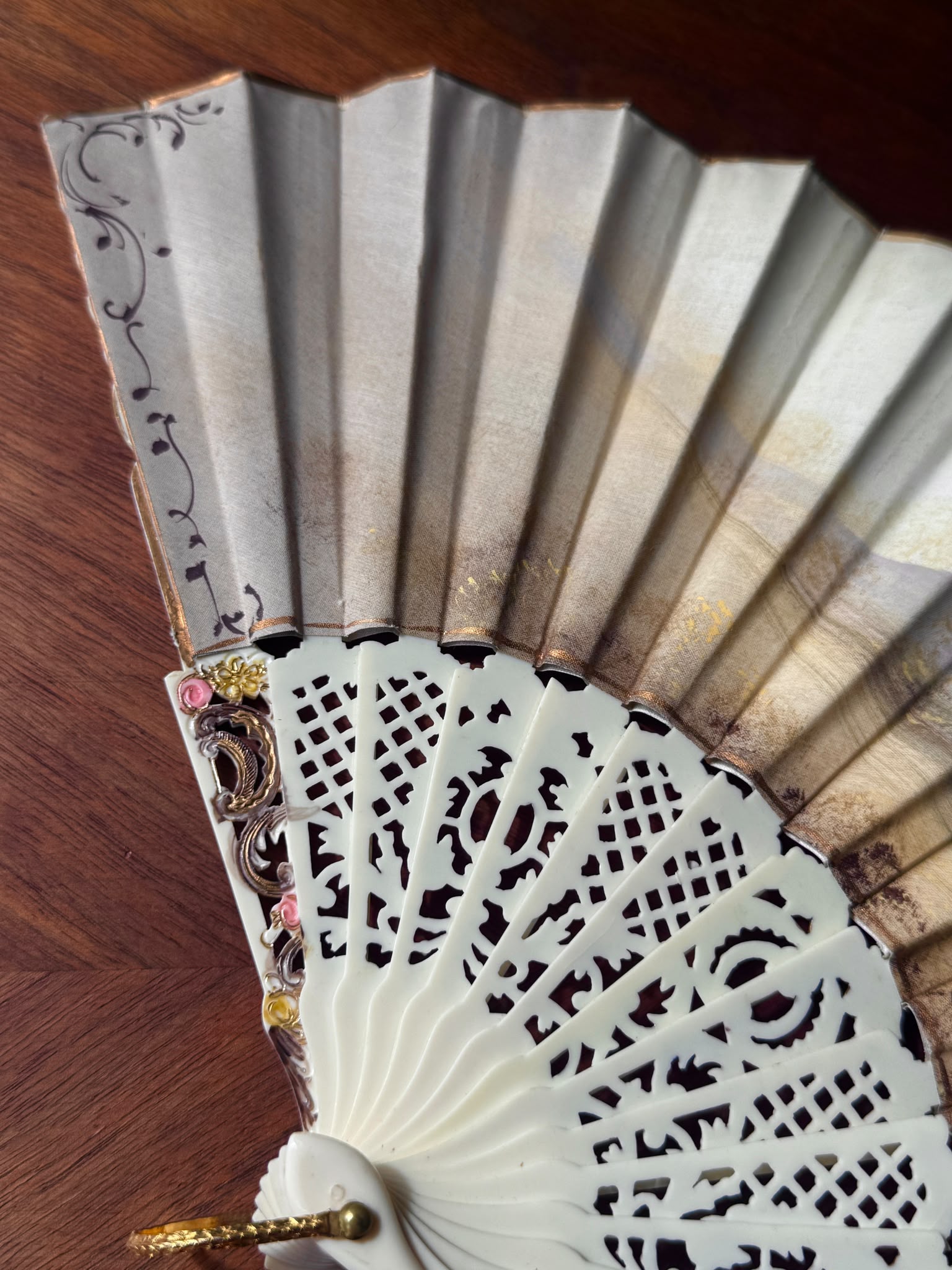
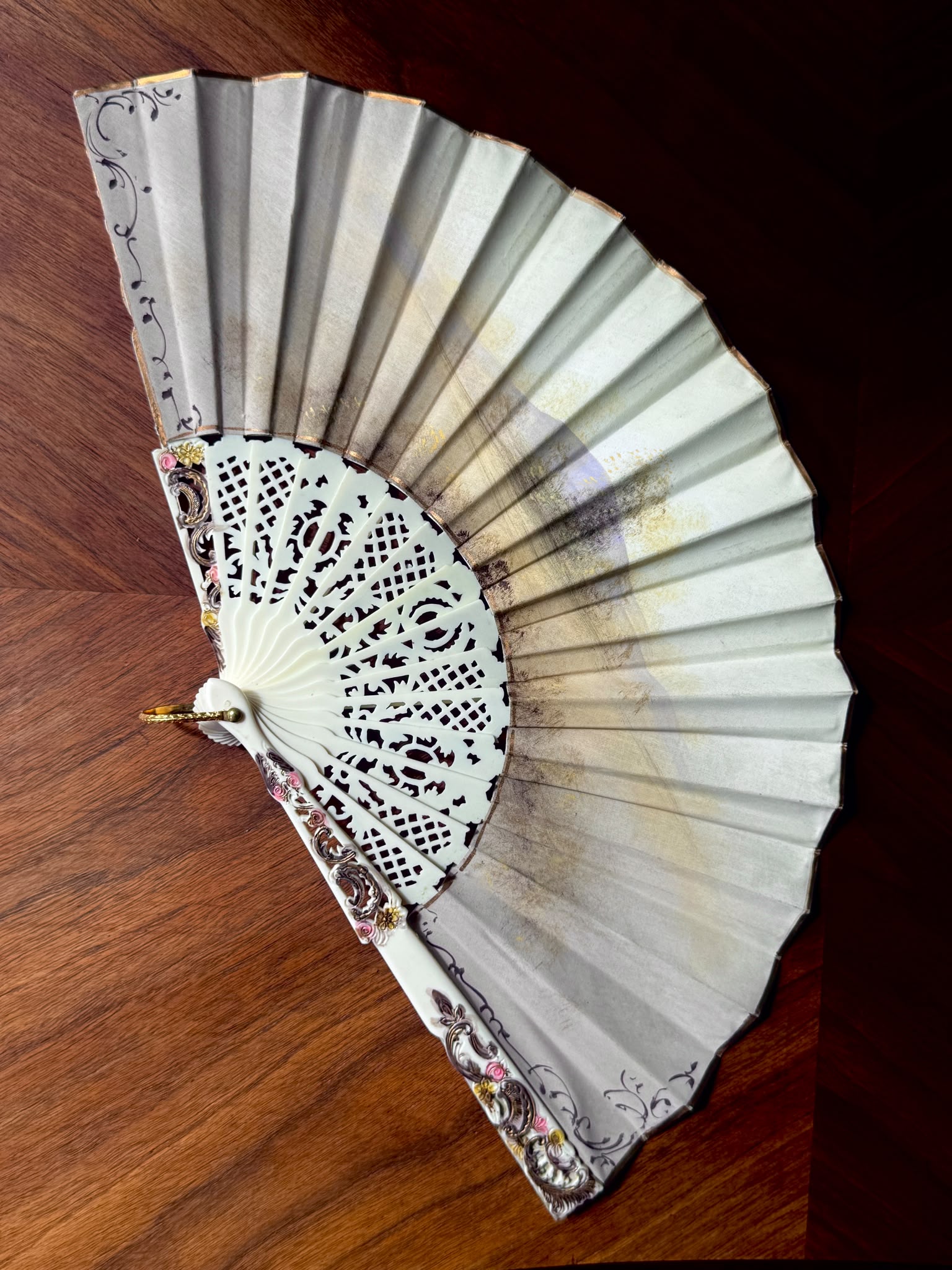
Its ivory-coloured celluloid sticks feature intricate pierced work and raised floral decoration, while the painted leaf bears an artist’s signature, whose identity remains unknown.
What surprises me most, however, is its remarkable state of preservation.
Fans are inherently fragile objects. They were repeatedly opened, closed and handled, and their delicate sticks and thin textile leaves were easily damaged over time.
Yet more than a century later, the structure, painted scene and intricate decorative details of this fan remain beautifully preserved.